AI in Healthcare: Real Applications Making a Difference Today
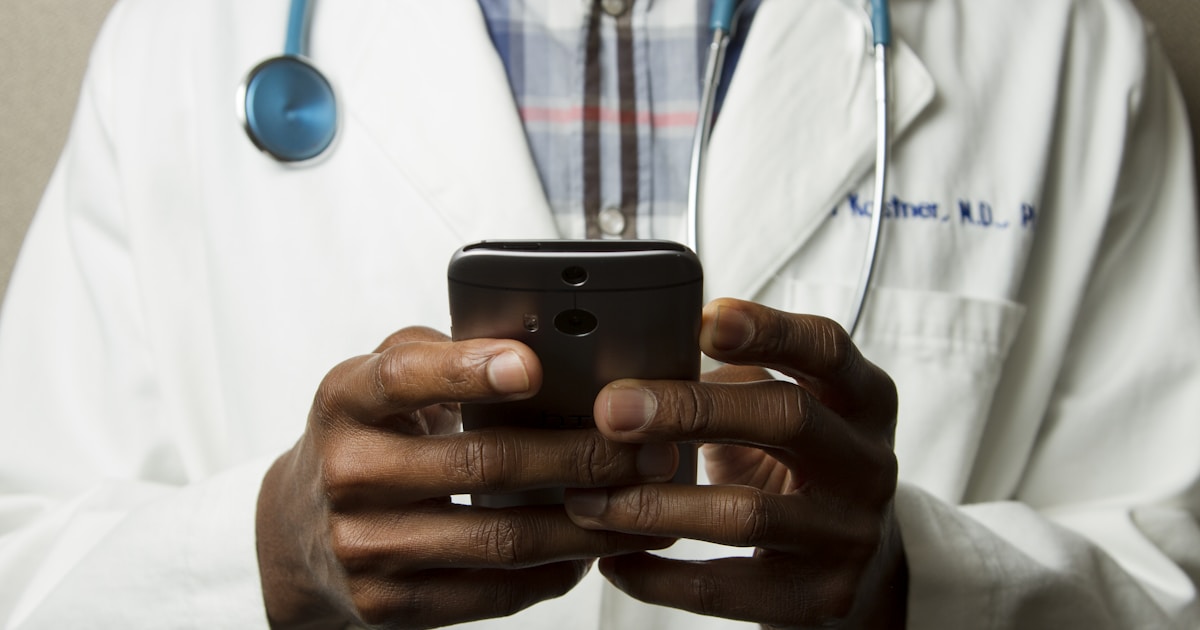
AI in Healthcare: Real Applications Making a Difference Today
Most articles about AI in healthcare are either breathlessly optimistic or dismissively skeptical. I wanted to understand what is actually happening right now, not what might happen in five years. So I spent time researching FDA-cleared AI medical devices, published clinical trial results, and hospital systems that have deployed AI in practice.
Here are the applications that are genuinely making a difference in healthcare today.
Medical Imaging and Diagnostics
This is the most mature application of AI in healthcare, and for good reason. AI is exceptionally good at pattern recognition, and medical imaging is fundamentally a pattern recognition task.
IDx-DR became the first FDA-cleared autonomous AI diagnostic system in 2018. It detects diabetic retinopathy by analyzing retinal photographs without requiring a clinician to interpret the results. In clinical trials, it achieved 87% sensitivity and 90% specificity for detecting more-than-mild diabetic retinopathy.
Since then, over 90 AI algorithms have received FDA clearance for medical imaging applications. These cover radiology (detecting tumors, fractures, and lung disease from X-rays and CT scans), pathology (analyzing tissue samples for cancer), dermatology (identifying skin lesions), and cardiology (analyzing echocardiograms).
The impact is practical. I spoke with a radiologist at a medium-sized hospital system who told me their AI triage system prioritizes emergency scans. When a CT scan shows signs of a brain bleed or pulmonary embolism, the AI flags it immediately so the radiologist reviews it first. Average time from scan to critical finding notification dropped from 4 hours to 15 minutes.
Drug Discovery
AI is compressing the drug discovery timeline from years to months. The most publicized example is AlphaFold 3, DeepMind's protein structure prediction system, which can predict the structure of protein complexes with high accuracy. This matters because understanding protein structures is fundamental to designing drugs that target specific diseases.
Insilico Medicine used AI to design a drug for idiopathic pulmonary fibrosis. The AI identified a new target and designed a molecule to hit it. The drug entered Phase II clinical trials in 2025, roughly 30 months from initial target identification. The traditional timeline for this process is typically 4-5 years.
Recursion Pharmaceuticals has built an entire platform around AI-driven drug discovery. They have automated microscopy systems that generate millions of images of cells under different drug conditions, and AI models analyze these images to identify promising drug candidates. They currently have multiple drugs in clinical trials that were discovered using this approach.
Clinical Decision Support
AI systems that assist doctors with clinical decisions are in active use at major hospital systems.
Epic Systems, the dominant electronic health record provider in the US, has integrated AI-based clinical decision support into its platform. One module predicts sepsis onset 4-6 hours before clinical recognition by analyzing patient vitals and lab results. Hospitals using this system report a 20-30% reduction in sepsis mortality rates.
Mayo Clinic has developed an AI system that analyzes ECG readings to detect asymptomatic left ventricular dysfunction, a condition that affects 3-5% of the population but often goes undiagnosed until it causes serious heart problems. The AI caught cases that human cardiologists missed in 93% of cases.
Administrative Automation
The less glamorous but equally important application is AI for healthcare administration. Hospitals and clinics spend enormous amounts of staff time on paperwork, coding, scheduling, and billing.
Notable Health uses AI to read medical records and automatically generate billing codes. Their system reportedly reduces coding errors by 60% and speeds up the billing cycle. For hospitals that process thousands of claims per week, this translates to millions of dollars in recovered revenue.
TigerConnect uses AI to optimize hospital communication workflows, ensuring that critical information reaches the right clinician at the right time. Their system has been adopted by over 7,000 healthcare facilities.
Mental Health Support
AI-powered mental health tools are filling gaps in the mental health care system, particularly for people who lack access to traditional therapy.
Woebot, an FDA-cleared AI chatbot for mental health, delivers cognitive behavioral therapy techniques through conversational AI. Clinical studies showed it reduced symptoms of depression and anxiety in users, particularly young adults.
Wysa, another AI mental health companion, has over 5 million users. It uses evidence-based techniques from cognitive behavioral therapy, dialectical behavior therapy, and mindfulness. While not a replacement for professional therapy, it provides accessible support for people who would otherwise receive none.
The Honest Limitations
AI in healthcare has real limitations that are important to acknowledge:
Regulatory approval is slow. Most AI tools are used as decision support, not autonomous diagnostic systems. The FDA clearance process ensures safety but limits how quickly new tools reach patients.
Bias remains a problem. AI models trained on data from specific populations may not perform well for underrepresented groups. Several studies have shown that dermatology AI performs worse on darker skin tones because training data was skewed toward lighter skin.
Explainability is difficult. Clinicians need to understand why an AI made a specific recommendation. "Black box" models that cannot explain their reasoning face resistance from doctors who are trained to base decisions on transparent reasoning.
Liability is unresolved. When an AI system makes a wrong recommendation that harms a patient, who is responsible? The hospital, the doctor, the AI vendor, or the model developer? This legal question is still being worked out.
AI is making genuine contributions to healthcare, but it is a tool that augments clinicians rather than replacing them. The applications I described above are all used alongside human professionals, not in place of them.
Comments
No comments yet. Be the first to share your thoughts!
Related Articles



Related Articles
Stay ahead of the curve
Get the latest insights on AI, technology, and innovation delivered weekly.